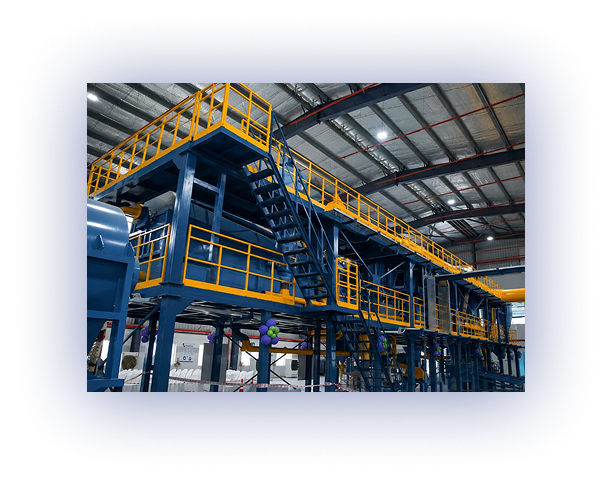
E-waste recycling Plant
Designing a scalable system for recovering value from discarded electronics.
Ghaziabad
India
Project Overview
E-Waste Recycling Plant
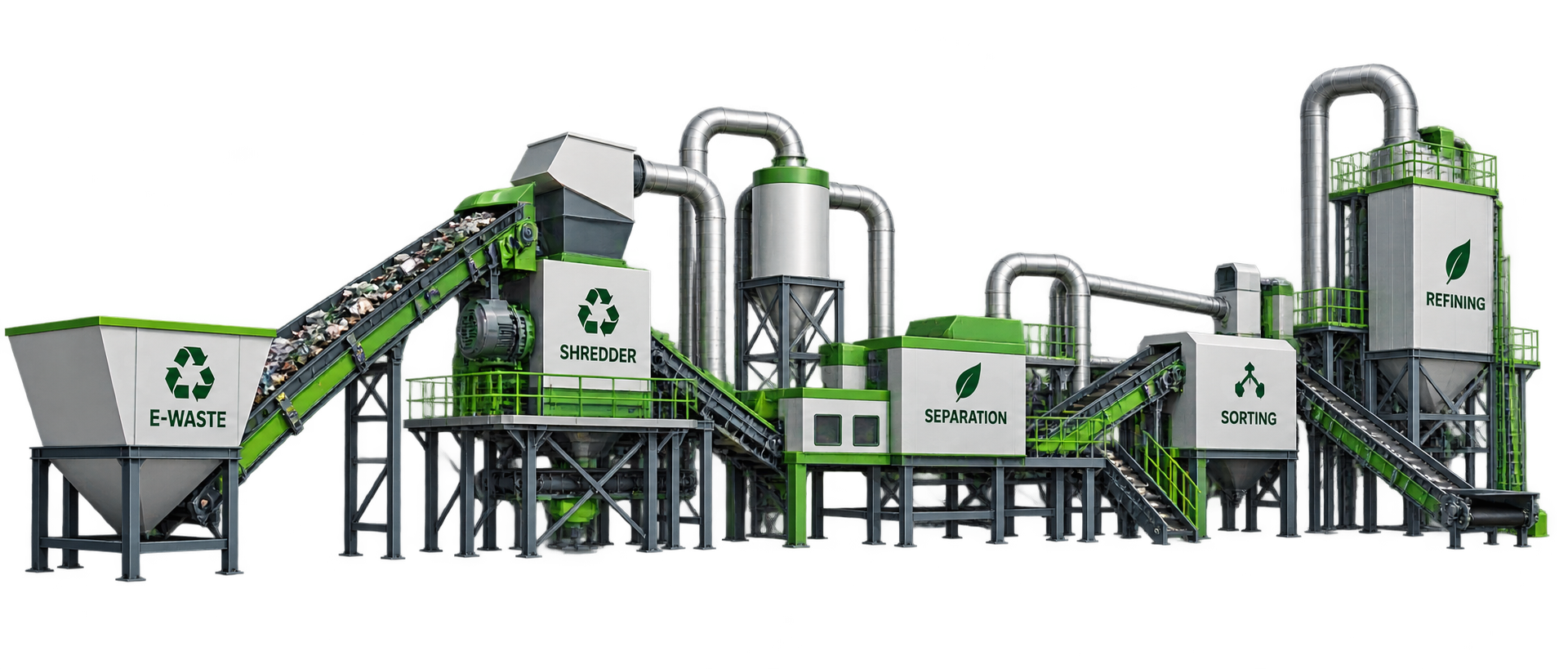
Refnic proposed an integrated e-waste recycling facility designed to transform discarded electronic equipment into sorted, recoverable materials. The plant brings together material reception, dismantling, shredding, separation and material recovery into one streamlined industrial system. The concept focuses on creating a facility that is efficient, scalable and safer for workers, while making the movement of materials through the recycling process easier to understand and manage.
The Challenge
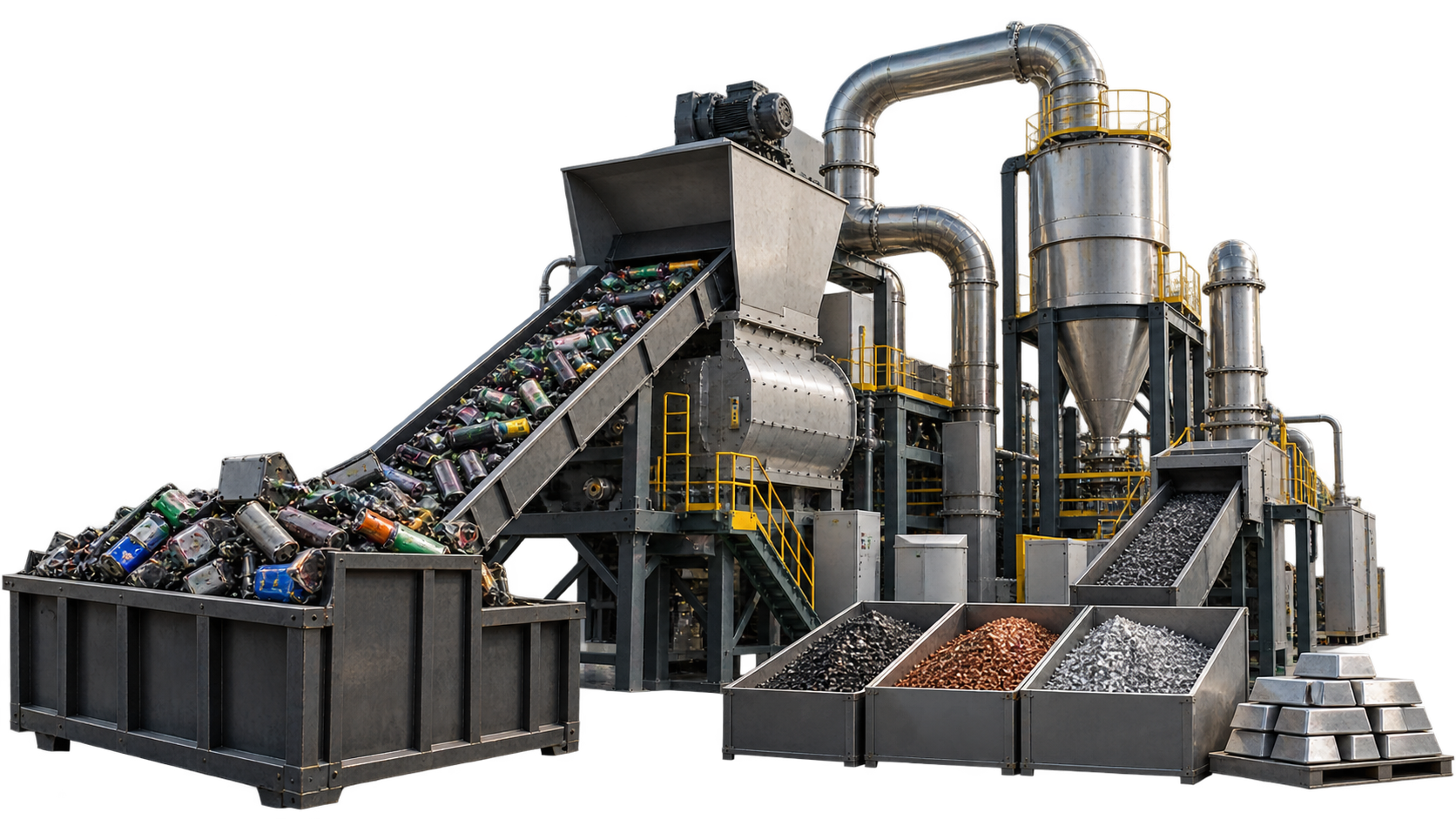
Growing volumes of discarded electronics create a complex waste stream containing plastics, ferrous and non-ferrous metals, circuit boards and other valuable materials.
Lorem ipsum dolor sit amet, consectetur adipiscing elit, sed do eiusmod tempor incididunt ut labore et dolore magna aliqua. Ut enim ad minim veniam, quis nostrud exercitation ullamco laboris nisi ut aliquip ex ea commodo consequat. Duis aute irure dolor in reprehenderit in voluptate velit esse cillum dolore eu fugiat nulla pariatur. Excepteur sint occaecat cupidatat non proident, sunt in culpa qui officia deserunt mollit anim id est laborum. Lorem ipsum dolor sit amet, consectetur adipiscing elit, sed do eiusmod tempor incididunt ut labore et dolore magna aliqua. Ut enim ad minim veniam, quis nostrud exercitation ullamco laboris nisi ut aliquip ex ea commodo consequat. Duis aute irure dolor in reprehenderit in voluptate velit esse cillum dolore eu fugiat nulla pariatur. Excepteur sint occaecat cupidatat non proident, sunt in culpa qui officia deserunt mollit anim id est laborum. The challenge was to develop a recycling plant capable of handling this mixed input while maintaining a clear material flow, reducing unnecessary handling and creating a controlled environment for recovery. The proposed facility also needed to balance industrial efficiency, worker safety, spatial planning and material recovery within a single system.
Our Approach
Refnic approached the plant as an interconnected system rather than a collection of individual machines.
Refnic approached the project by first understanding the complete journey of e-waste through the proposed facility from the moment discarded electronic equipment enters the plant to the point where valuable materials are separated and prepared for recovery. Instead of treating each processing stage as an independent operation, we developed the plant around a connected process flow, ensuring that every stage seamlessly feeds into the next. The proposed system considers the characteristics of incoming e-waste, pre-processing and dismantling requirements, size reduction, sorting, separation and final material recovery. This process mapping helped determine the appropriate positioning of machinery, conveyors, workstations, storage areas and circulation zones while reducing unnecessary material movement and manual handling. By aligning the equipment, people and material pathways around a clear process sequence, Refnic created a plant concept designed for operational efficiency, accessibility, safety and future expansion. The result is a structured recycling environment where complex e-waste streams can move through the facility in a controlled and purposeful manner, turning a challenging waste-management process into an organised resource-recovery system.
What We Delivered
something
- 1. Plant Process Mapping Defined the complete recycling journey from e-waste intake to recovered material output
- 2. Facility Layout Developed a structured spatial arrangement for machinery, processing zones, storage and circulation.
- 3. Machinery Integration Positioned shredding, sorting, separation and material-processing equipment according to the process flow.
- 4. Material Flow System Established clear pathways for incoming waste, intermediate materials and final recovered outputs.
- 5. Safety & Accessibility Planning Integrated worker circulation, controlled access areas and maintenance zones into the plant design.
- 6. 3D & CAD Development Translated the proposed system into CAD models and 3D visualisations to communicate machinery relationships and spatial requirements.
- 7. Output Recovery Zones Created dedicated areas for segregated materials, enabling recovered metals, plastics and other components to move into subsequent processing or reuse streams.
From discarded electronics to recovered resources, Refnic reimagines e-waste recycling as a connected, scalable and purposeful industrial system. Absolutely that section can be expanded into a more premium, industrial case-study style paragraph, rather than sounding like a list.